
What is brown patch?
Brown patch (also called large patch) is a lawn disease caused by the fungus Rhizoctonia solani. It lives in your soil all year, waiting for the right conditions: mild temperatures, heavy rain, and grass blades that stay wet for long periods.
In Northeast Florida it hits St. Augustine and zoysia lawns hardest, usually from fall through spring. It rarely kills the roots, but left alone it can spread fast and leave large dead areas that are slow to fill back in.
Seeing the signs of brown patch
-
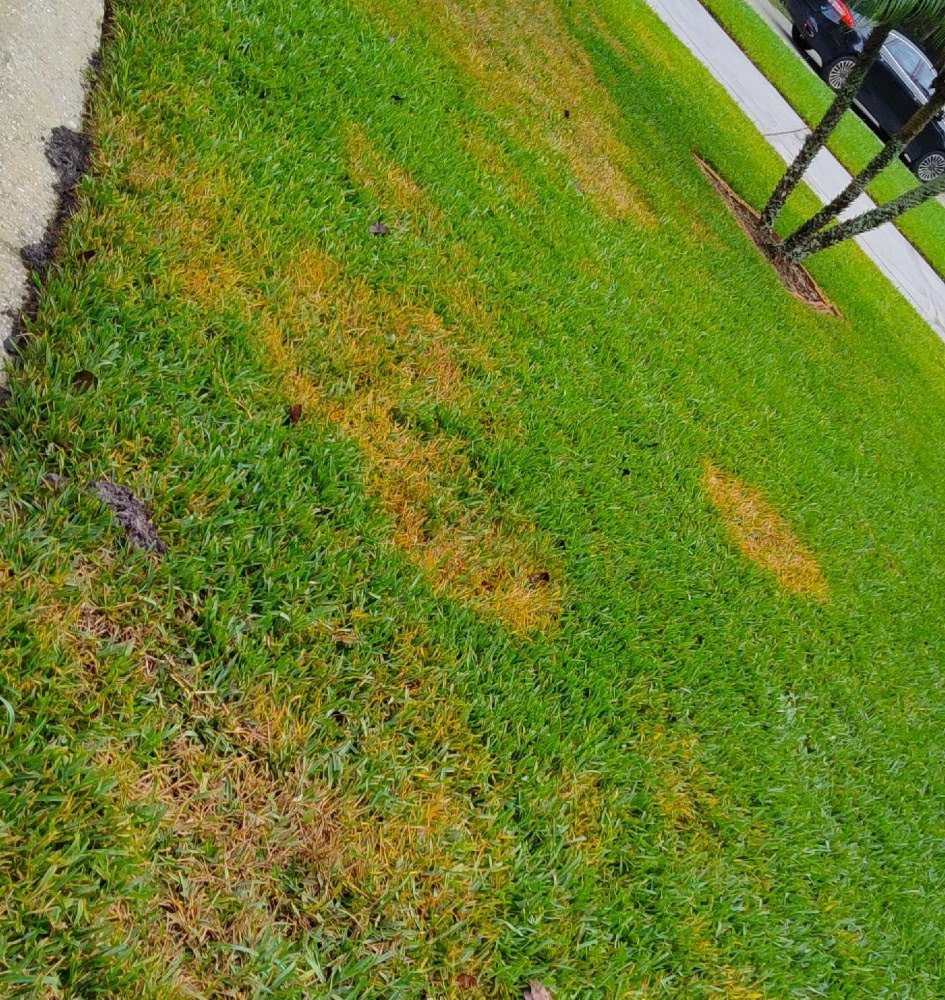
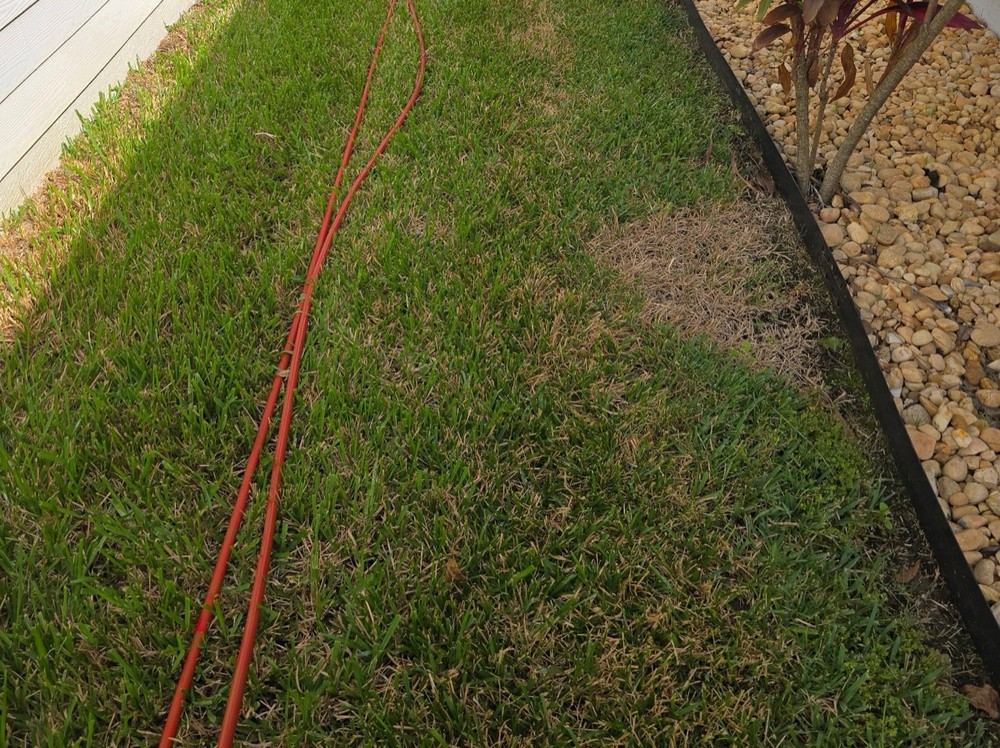
Circular or oddly shaped patches
From a foot to several feet across, often with a yellow-orange edge.
-
More damage in warm, humid weather
Patches show up or grow after rainy, overcast stretches.
-
Yellowish or brownish spots on the grass
Blades pull out easily, and their bases look dark and rotted.
-
Patches that grow larger and spread
Mowers, foot traffic and running water can carry it across the yard.
What you can do right now
The fungus is always in your soil. The goal is to take away the conditions it needs.
Reduce watering
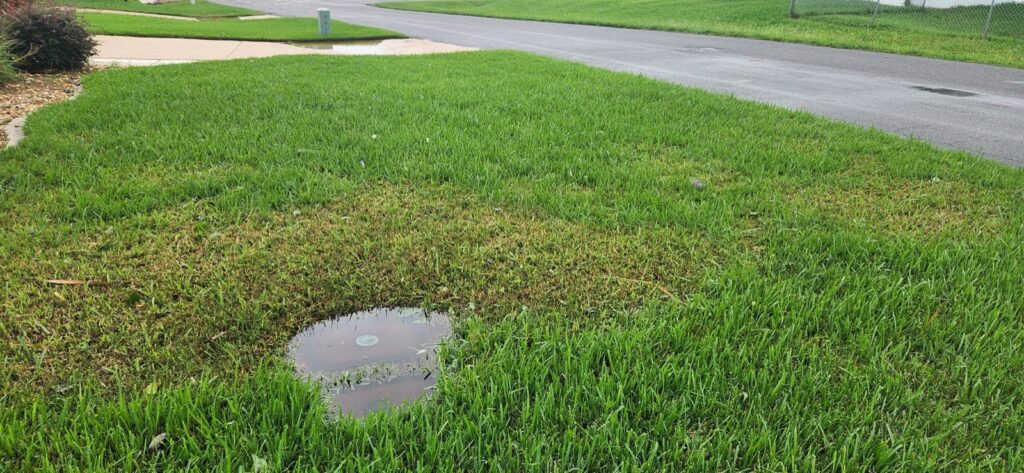
Turn off or cut back irrigation after heavy rain. When you do water, water early in the morning so the grass dries during the day.
Mow properly
Keep St. Augustine at 3.5–4 inches, never scalp it, and keep your blade sharp. Mow infected areas last so you don't spread it.
Improve drainage
Fix low spots where water sits, relieve compacted soil, and point downspouts away from the lawn.
Tip Hold off on heavy nitrogen fertilizer while brown patch is active. It feeds the disease.
Revive your lawn with Xquisite Lawn & Pest
“Quality Rooted in Science” means we treat the cause, not just the symptom. Our Integrated Pest Management (IPM) approach builds a lawn that resists disease to begin with.
Nutrient Management
Balance essential nutrients to help strengthen turf and support healthy growth.
Simply Xquisite Monthly Lawn CareCultural & Soil Adjustments
Improve soil conditions, moisture management, and mowing practices to reduce disease pressure.
Soil AerationRecovery & Restoration
Help damaged turf recover and restore a healthier, more resilient lawn.
Topdressing & Compost Service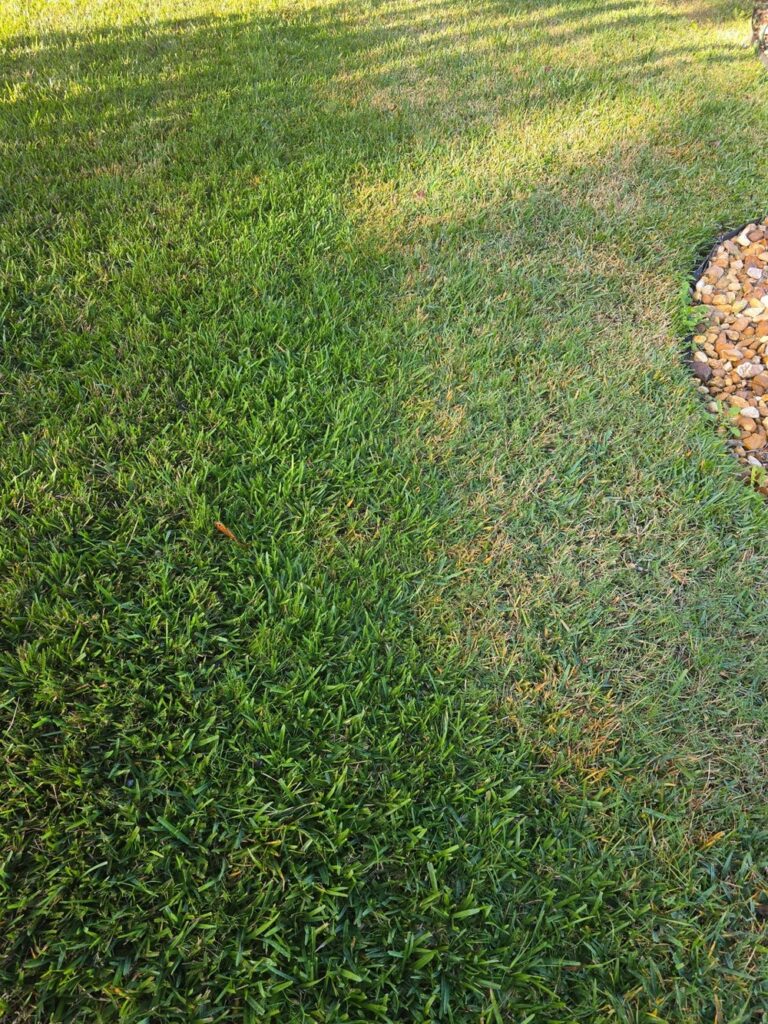 Xquisite Lawn
Neighbor's Lawn
Brown patch FAQs
Is my lawn dead?
Usually not. Brown patch attacks the leaf blades, not the roots. With the right care, affected areas typically grow back as temperatures warm and conditions dry out.
Will it come back?
It can. The fungus stays in the soil, so it may return any time the weather turns wet and mild. Good watering, mowing and drainage habits make outbreaks smaller and less frequent.
Can I just spray a fungicide?
Fungicides work best as prevention, before patches appear. They won’t turn brown grass green again, and they don’t fix the watering or drainage problems behind the outbreak. That’s why we pair targeted treatment with soil and cultural changes.
Is it brown patch or chinch bugs?
Chinch bug damage shows up in hot, dry, sunny spots, often along driveways and sidewalks. Brown patch shows up in mild, wet weather, and the blades pull out easily at a rotted base. Not sure? We’ll take a look.